
|

|

|
|
Celebrating Life Everyone Has A Story... |
|
Journal | Press | New Profession | Blog |
Funeral Celebrant Los Angeles
|
Pam Vetter February 2, 2009 |
 This article is the final installment of a four-part series entitled "In Their Own Words," sharing stories about personal, meaningful funerals or memorials.
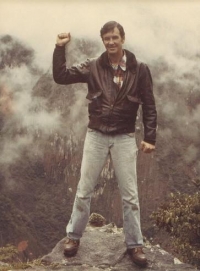
In facing loss, we are reminded that death and funerals change lives. In one of the more fascinating stories ever heard, Miriam Newman of Elverson, Pennsylvania, made lemonade out of lemons after a loved one's death. When her husband, David Newman, died at the age of 61 after being sick for four and a half years, her life changed dramatically. "I can't honestly say I remember too much of my husband's funeral. I do remember that my stepsons were fighting over who should carry the casket (like there isn't enough room for everyone-there are only three of them) and the priest changed the manner of the service to keep them from each others' throats and preached a sermon on the virtues of forgiveness. Which tells you why I did what I did after the funeral. I ran away," Newman explained. "I took the life insurance money and I ran away to Ireland, where my husband and I had always planned to go. I stayed there for three years with just enough trips home to continue my tourist status. I thought about what I wanted to do. Not what I had to do or what prudence dictated I should do, but what I wanted to DO. And I concluded that I wanted to write. I always did; I had written and published poetry for years. But I wanted to write a book. I didn't have the money for a laptop, so I took yellow legal pads a la J. K. Rowling and sat in pubs, sheep pastures, hotel rooms, old crumbling Norman watchtowers and the ruins of the Rock of Cashel and I wrote. The Irish, God bless them, thought it was great. They brought me tea. They brought me pens. They brought me Guinness Stout (I did pay for that) and they told me stories—valuable stories that I incorporated into my work." By the time Newman returned to the United States, she had written two historical fantasies. "Then, I got a laptop and wrote a contemporary fantasy romance about an American woman who falls in love with an Irish man and overcomes her fears to follow him. I now have four novels published, another coming out on Sunday, and three more accepted for publication and in editing." Newman added, "Oh, I came back home and got a real job. But now I know what it is I want and that life is short and I should do it." For Sally Brown of Hugo, Minnesota, saying goodbye at home was so powerful that she was considering helping other families with End of Life Celebrations. She remembers the death of her mother as one of the happiest times in her life. "The most meaningful funeral I have ever attended was the funeral we had for my mother in our home. It was one of the great miracles of my life. We planned the service during the last few days of her life, we were all in our home with the hospice workers. During the last days, she was in a coma. I kept talking to her telling her that we were planning a party on Saturday to celebrate her life, and that it was up to her. She could stick around for the party if she wanted to (she really loved a party) or she could leave before, if she chose. On Saturday, she was still here. The minister came and the first thing she did was to go into Mom's room and bless her body, her feet, and all the way up to her face. When she got to her face, Mom raised up, for the last time and looked directly at her. It was amazing," Brown remembered. "We went into the living room and as part of the ceremony, we each told a story about Mom and when we told our story, we pinned a ribbon to a blanket. Then, my best friend sang Mom's favorite song, 'Bridge Over Troubled Water.' After the ceremony, we went back into her bedroom to 'cover her with her stories' and of course, she was gone. She left us just as we were celebrating her life." As a Home Funeral Guide, Olivia Bareham, of Sacred Crossings in Los Angeles, assists families to create personal and deeply meaningful funerals at home. Each funeral is unique and profoundly healing for everyone involved. In fact, Bareham points out that even children take to this ancient and natural ritual with surprising grace and ease. "I remember Mireille, a woman in her 50s who was losing a long battle with cancer. Her sister, Diane, was helping her through the transition, and wanted to continue to care for her body for a few days after Mireille's death. She said, 'Mireille is uncomfortable with the thought of strangers touching her, and she doesn't want to be kept in a cold, unfamiliar place. We heard you can help us keep her at home.' To be in the presence of one who is consciously choosing how they will be taken care of after death is a deeply humbling experience," Bareham said. "Mireille was very clear about everything she wanted. She wanted to be washed with the lavendar soap and annointed with the rose oil. She wanted the casket to be draped in the Flamenco shawl that she wore while she danced in Paris. She wanted Diane to read special prayers. She wanted me to go through her closet, holding up every outfit until she found the one she wanted to wear 'afterwards'... 'I think the cream skirt and blouse will be the easiest for you to get on,' she smiled, adding cheekily, 'I'm not going to be much help to you am I?' She asked if I would pin her collection of elaborately embroidered shawls on the walls of the bedroom, and play her Flamenco music on the CD player, so at least in her mind, she could dance her way out. She designed the altar in her bedroom - simple, a few photos of special people, some red daises, and a candle. She was ready to go, she said, and content, now that she knew what was going to happen after she'd gone." Diane called Bareham in the early hours of the morning after Mireille died. "Together we bathed and dressed Mireille, exactly as she wanted. Diane made a wreath of flowers for her hair and put a rosary in her hands. I packed her body with the dry ice and lit the votive candles scattered throughout the house. We set up the cremation casket along with a huge box of art supplies on the dining room table. Over the next three days her sons came to visit, neighbors and friends stopped by, and everyone shared in the decorating of Mireille's casket. Photos, drawings and messages were posted down either side of the box and a beautiful dancer in soft pastels adorned the lid. I went back to the apartment morning and night to change the ice and talk to Diane who sat devotedly by Mireille's bed reading the sacred prayers. The kitchen was filled with the smell of soup and baked pies, and the chattering voices of relatives, happy to be together again, happy that their beloved Mireille was just in the other room should they feel the need to go and visit. Everyone visited. Some more than the once. Small children tugged at the sleeves of those who were hesitant, urging them to go in, 'She wont bite you know, she's in heaven now, it's just a body,' said one bold 6-year-old. The living room was constantly overflowing with guests who either didn't want to leave, or were waiting their turn to go and sit with Mireille. Everyone was drenched in awe at what was transpiring in their midst," Bareham explained. "On the fourth day, we lifted her body gently from the bed into the casket, and closed the lid. This powerful moment often melts the barriers to any unspoken words, so we each took turns to say our final goodbyes. Her sons then proudly shouldered the casket down three flights of stairs into the waiting car. Diane held my hand and whispered how it reminded her of the day Mireille was married, how as a bride she was helped down the stairs from the security of her home to the waiting car and the journey that would take her to her new life." Mary Thompson of Atlanta, Georgia, lost a good friend almost 10 years ago to a heart attack. The farewell was so personal; she will always remember saying goodbye. "His name was Ballard, he was in his late 50's and he was a long time employee of MARTA (public transportation system) here in Atlanta. We all went to a party the night he died at a restaurant/club and it was Beach Boy night where everyone dressed up like they were going to a Beach Boys concert and it was a very cold night in February. Ballard had always said that if he had to die, he wanted to do it with a drink in one hand, a cigarette in the other, and a woman on his arm. That is just about how it happened! He had just finished dancing with a girl at the party and he sat down with some of our friends at one table of about five tables that we had together. The next thing we knew he slumped down and was on the ground. Our friend was performing CPR on him while we all were calling out his name to hang in there. Unfortunately, he passed on later that evening after they took him to the hospital," Thompson said. "That night at the party, there was a photographer there for the event. All 30 of us got together for a photograph. Ballard, in keeping with his personality, had a beer bottle on top of his head, and he was wearing a crazy hat, too. We had arranged to purchase that photo before Ballard died later that evening, so you can imagine how special that photo was for each us, having a copy of the last photo of Ballard, literally hours before his death. Ballard had served in the Navy and loved the water. He along with many of us had house boats parked at Aqualand Marina on Lake Lanier here in Georgia where we would all get together on the weekends and enjoy each others company. Ballard was living on his boat at the time. So, after he died we all got together down on our mutual boat dock and had a service for Ballard on one of the larger houseboats. We went around the room and told the funniest stories about Ballard that maybe the others did not know occurred." At the houseboat gathering, Thompson played guitar and sang one of Ballard's favorite songs, "Fire and Rain," by James Taylor. "It was hard getting thru that song," Thompson reminded. "We finished our service for Ballard by going out on the back deck of the houseboat. We all had one rose or carnation with us and one by one we tossed the flowers into the Lake and they floated for a long time down the cove where Ballard's boat was parked. It was so very special and since Ballard loved the water, he would have loved that service. His family then arranged with the Navy to have him officially buried at sea in the Atlantic Ocean." Thompson has been so moved by personal farewells in her own family, she created Custom Slide Show Creations, to help families create memorials to loved ones. Stan Goldberg, author of the upcoming book "Lessons for the Living: Stories of Forgiveness, Gratitude, and Courage at the End of Life," has served as a hospice volunteer. Oftentimes, the funeral is more of an experience rather than a single event. "The funeral service for someone in hospice (facility and at home) often begins at the bedside immediately after death. As a volunteer for six years, I've often been with patients and families during this sacred period. It is a time to honor the person's life," Goldberg said. "After some deaths, family members become involved in the ritual cleaning of the body. For others, stories are told how the person affected the lives of those at the bedside. By the time the body is removed (anywhere from hours to three days), healing begins for the family and those of us who served the person." Pictured: David Newman, husband of Miriam Newman For more information on the writings of Miriam Newman, visit www.miriamnewman.com. For Part One of this article series link to In Their Own Words: Powerful, Personal Memorial Ceremonies Capture Passions and Favorites in Life . For Part Two of this article series link to In Their Own Words: Meaningful Funerals Create Memories That Last a Lifetime . For Part Three of this article series link to In Their Own Words: Poignant Funeral Services Matter to Family and Friends. |
Go back to top
|
Copyright © 2005- Pam Vetter. All rights reserved. ADA Compliance Page Privacy and Cookie Policy |